Video credit: TMITM Home via YouTube.
A kitchen sink may not be the first thing you think about when planning a renovation.
Cabinets get the attention. Countertops get the Pinterest boards. Lighting gets discussed over approximately 47 cups of coffee.
But the sink?
You use it every single day.
That is why choosing the right sink can make a much bigger difference than you might expect. And if you’ve been looking at a Silgranit sink, particularly a Blanco Silgranit sink, you’ve probably already noticed that it looks very different from a traditional stainless-steel model.
The original One Plus Two Design Co. article approaches the subject from a renovation perspective, explaining why the designer chose Silgranit and showing several kitchen examples featuring the material. The article’s images range from dramatic dark sinks to bright white farmhouse-style designs and practical kitchen workstations.
So, what exactly makes Silgranit interesting? Is it better than stainless steel? Is a black kitchen sink really practical? And is the extra cost justified?
Let’s dig in.
What Is a Silgranit Sink?
Silgranit is a granite-composite sink material developed by BLANCO. The manufacturer describes it as a patented material made with up to 80% natural granite blended with acrylic.
That combination gives the sink a stone-like appearance while allowing it to be produced in a wide range of colors and designs.
This is one of the biggest reasons people choose Silgranit.
It does not look like a standard stainless-steel sink dropped into the countertop as an afterthought. Instead, it can become a design feature in the kitchen.
Think of stainless steel as the classic white sneaker of kitchen sinks: reliable, versatile and always around.
Silgranit is more like the beautifully designed boot you deliberately chose because you wanted people to notice it.
Why Silgranit Sinks Have Become So Popular
The appeal comes down to a combination of appearance, durability, color choice and everyday practicality.
BLANCO says Silgranit is designed to withstand heavy cookware, hot bakeware and everyday scuff marks. The company also describes the surface as non-porous and easy to care for.
For a kitchen sink that gets used dozens of times a day, those characteristics matter.
After all, your sink sees everything.
Hot pans.
Cold dishes.
Sharp utensils.
Food scraps.
Tomato sauce.
Coffee.
That one mysterious stain nobody remembers creating.
Good kitchen design has to survive real life, not just photographs.
Silgranit Sink vs. Stainless Steel Sink
This is probably the biggest comparison homeowners make.
| Feature | Silgranit | Stainless Steel |
|---|---|---|
| Appearance | Stone-like, matte finish | Metallic finish |
| Color choices | Many colors | Mostly metallic tones |
| Scratch visibility | Designed to resist everyday scuffs | Scratches can be visible |
| Staining | Designed to resist stains | Generally stain resistant but can show spots |
| Noise | Often quieter in use | Can sound louder without sound-dampening |
| Design impact | High | Classic and understated |
Neither material wins every category.
Stainless steel remains incredibly popular because it is practical, widely available and usually offers excellent value.
Silgranit makes a particularly strong case when appearance matters just as much as function.
That was one of the central attractions in the original design article: the sink was treated as part of the overall kitchen design rather than simply a utility fixture.
Why Choose a Black or Dark Silgranit Sink?
A dark kitchen sink can sound risky.
Will it show every mark?
Will it make the kitchen feel too dark?
Will it look dated?
These are reasonable questions.
But a dark composite sink can create fantastic contrast, especially when paired with white or light countertops.
Black, anthracite and charcoal-style sinks can also work particularly well with natural wood cabinetry.
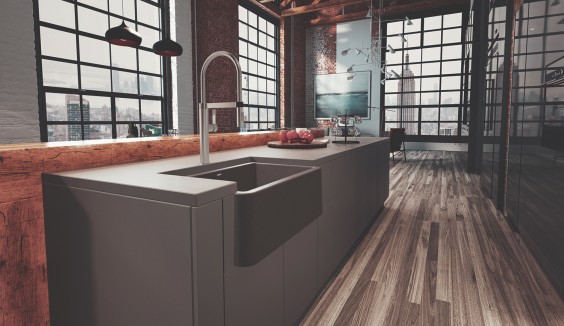
Look at the first example above. The darker basin works beautifully with the warm wood tones around it.
The combination feels modern without being sterile.
What About a White Silgranit Sink?
White is a completely different look.
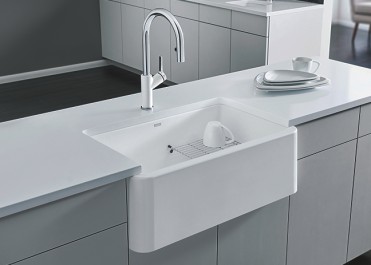
Instead of creating contrast, a white or soft-white Silgranit sink can blend smoothly with light countertops.
The result is bright, clean and visually calm.
This can work especially well in kitchens featuring:
- White cabinets
- Light countertops
- Soft grey walls
- Natural wood accents
- Modern farmhouse details
- Minimalist styling
If you’re planning a light kitchen palette, your choice of wall color will also matter. Our guide to the best grey paint colors can help when you’re choosing a neutral backdrop.
Silgranit Sink Colors: More Than Just Black and White
One of the biggest attractions of Silgranit is color.
BLANCO currently offers Silgranit sinks in several shades, including dark neutrals, greys, white, truffle and café-inspired tones, depending on the sink collection.
That gives homeowners much more freedom than they typically get with stainless steel.
You can coordinate the sink with the countertop.
You can contrast it with the cabinets.
Or you can deliberately make it the statement piece.
For more neutral color inspiration, take a look at our guide to neutral paint colors for the home.
How Durable Is a Silgranit Sink?
Durability is one of the strongest selling points.
BLANCO says the material is designed to withstand heavy cookware, hot bakeware and everyday scuffing.
That does not mean you should deliberately test the sink by launching a cast-iron skillet into it.
It’s a kitchen sink, not a stunt arena.
But normal kitchen abuse is exactly what a good sink needs to tolerate.
A busy family kitchen puts considerably more stress on a sink than a showroom display ever will.
Is Silgranit Heat Resistant?
One of the questions many homeowners ask is whether they can place hot cookware in a Silgranit sink.
BLANCO describes Silgranit as resistant to heat from boiling water, hot pots and hot bakeware.
However, heat resistant does not mean heat proof under every conceivable circumstance.
Normal manufacturer guidance should always be followed.
If you’re pouring boiling pasta water into the sink, using sensible precautions is still a good habit.
Is a Silgranit Sink Easy to Clean?
One of the nice things about the material is that it does not require complicated daily care.
BLANCO recommends regular cleaning using dish soap and the soft side of a sponge, followed by rinsing and drying with a microfiber cloth.
That sounds wonderfully manageable.
No laboratory coat required.
For deeper cleaning, the manufacturer provides additional instructions for dealing with limescale, stains and scuff marks.
Its current care guidance specifically advises against strong abrasive cleaners, metal scrub pads and steel wool because these can scratch or dull the surface.
For detailed manufacturer instructions, see BLANCO’s official SILGRANIT cleaning and care guide.
What About Water Spots and White Marks?
Dark composite sinks can sometimes show mineral deposits or light residue more clearly than you might expect.
This does not necessarily mean the sink is permanently stained.
According to BLANCO’s care guidance, limescale can contribute to discoloration and stubborn-looking marks.
The manufacturer’s recommendation is to address limescale regularly rather than allowing deposits to build up.
That brings us back to an important point: the easiest sink to maintain is usually the sink that is cleaned regularly.
Letting mineral buildup sit there for months and then expecting a five-second wipe to perform a miracle is probably asking a lot.
Can Silgranit Sinks Scratch?
Silgranit is designed to resist scratches and everyday scuffs, but no kitchen surface should be considered indestructible.
BLANCO notes that some apparent marks from metal utensils may actually be metal transferred onto the surface rather than damage to the sink itself.
That type of mark can often be removed with suitable mild cleaning methods.
Use the manufacturer’s recommended cleaning products and tools, especially if the sink has developed a mark that won’t disappear with normal dish soap.
Why Sink Shape Matters as Much as Material
It is easy to become obsessed with the material and forget the shape.
Don’t.
A fantastic sink in the wrong configuration can be frustrating every single day.
Consider whether you want:
- A single large bowl
- A double bowl
- A low-divide sink
- A farmhouse or apron-front design
- An undermount sink
- A top-mount installation
- A workstation-style design
Your cooking habits should guide the choice.
If you regularly wash large pots and baking trays, a large single bowl can be extremely useful.
If you prefer separating food preparation from dishwashing, a double bowl may make more sense.
Single-Bowl vs. Double-Bowl Silgranit Sink
Single Bowl
A large single bowl gives you uninterrupted space.
Large baking trays fit more comfortably.
Big pots can sit flat.
Washing awkward cookware becomes easier.
The downside is that you lose the ability to separate tasks within the sink.
Double Bowl
A double-bowl configuration gives you two working areas.
You can rinse on one side while washing dishes on the other.
For people who like a little organization during cleanup, this can be useful.
Low Divide
A low divide attempts to combine some of the advantages of both designs.
You get two sections, but large cookware can extend across the divider.
That can be a very practical compromise.
Workstation Silgranit Sinks
Workstation sinks have become increasingly popular because they treat the sink as part of the food-preparation area.
Accessories may include grids, colanders, cutting boards or other inserts, depending on the model.
The goal is simple: get more useful workspace out of the same countertop area.
The supplied Silgranit image shows a large sink with a generous counter area and practical accessories nearby, demonstrating how the sink can become part of the overall cooking workflow.

Why the Sink Should Be Chosen with the Countertop
A sink and countertop should be considered together.
Color matters.
Installation matters.
Edge details matter.
Even the height and depth of the sink can affect how the countertop works around it.
For example, an undermount Silgranit sink can create a clean transition from countertop to basin.
That makes wiping crumbs and food scraps toward the sink much easier.
This type of clean-lined approach works particularly well with transitional kitchen design. You can find more inspiration in our guide to transitional interior design.
Farmhouse Silgranit Sinks
An apron-front or farmhouse-style sink can create a very different visual effect.
Instead of disappearing into the cabinetry, the sink becomes a visible architectural feature.
That can work beautifully with:
- Shaker cabinets
- Natural wood
- Classic hardware
- White countertops
- Farmhouse-inspired décor
But farmhouse sinks also require careful planning because the cabinet and countertop configuration must accommodate the sink dimensions.
Can a Silgranit Sink Work in a Farmhouse Kitchen?
Absolutely.
The material is modern, but the shape can be traditional.
That’s one of its strengths.
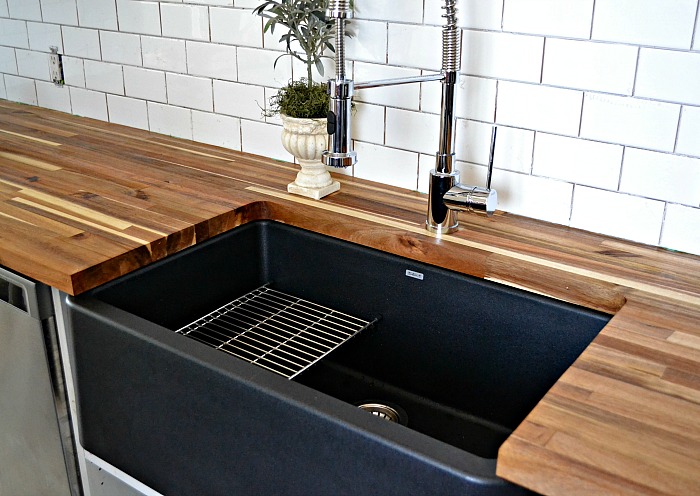
You can combine a contemporary composite material with classic farmhouse styling and end up with a kitchen that feels comfortable rather than overly modern.
This is also where color becomes important.
A dark sink can add contrast to white cabinets.
A lighter sink can blend seamlessly with a pale farmhouse palette.
For another example of blending modern and traditional elements, our main bathroom renovation shows how neutral finishes and natural textures can work together.
Before and After: Why the Sink Can Change the Whole Kitchen
One of the supplied images shows a much more traditional kitchen before renovation.
Wood cabinetry surrounds a small central sink, while the overall space has a distinctly older appearance.
Images like this are useful because they demonstrate something important about remodeling.
You don’t always appreciate how much a single fixture contributes until you compare the before and after.
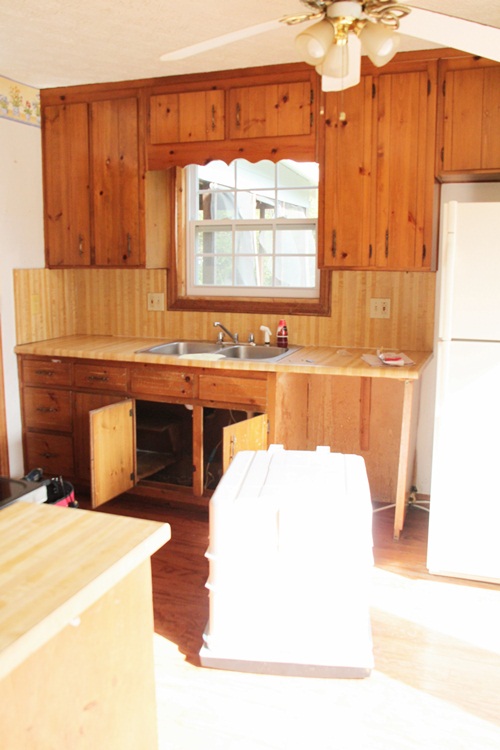
A new sink can change the proportions of the kitchen, the color balance, and the overall visual style.
That’s why choosing it late in the renovation process can be a mistake.
How a Sink Fits into a Complete Kitchen Renovation
A successful kitchen renovation usually involves several decisions that need to work together.
- Cabinet style
- Countertop material
- Sink size
- Sink configuration
- Faucet style
- Lighting
- Hardware
- Wall color
- Flooring
When all of these elements are coordinated, the kitchen feels intentional.
When every choice is made separately, the room can start looking like a collection of products rather than one cohesive space.
If you’re planning a major renovation, our modern interior design trends guide can provide additional ideas for creating a more current look.
Silgranit Sink and Faucet Pairings
The faucet is the sink’s closest neighbor, so don’t ignore it.
A dark Silgranit sink can look excellent with:
- Brushed brass
- Matte black
- Brushed stainless
- Polished chrome
- Warm bronze
A white sink gives you even more freedom.
The faucet can become the contrast feature, or you can keep everything in a similar color family.
The supplied images show that the sink and faucet combination can become an important part of the overall kitchen composition rather than simply a practical pairing.
How to Choose the Right Silgranit Color
Start with your countertop.
Then look at the cabinets.
After that, consider the floor and wall colors.
A dark sink can create dramatic contrast with light surfaces.
A light sink can make a bright kitchen feel even more seamless.
If your room already contains several strong finishes, a neutral sink may be the safest choice.
If the rest of the kitchen is simple, a dark sink can provide exactly the visual punch you need.
For more help working with warm neutral colors, see warm grey paint ideas.
Is a Silgranit Sink Good for a Busy Family Kitchen?
It can be an excellent option for a busy kitchen because durability and easy-care characteristics are two of the material’s biggest selling points.
The real advantage, though, is choosing a configuration that matches your habits.
A family that cooks large meals may want a wide single bowl.
Someone who hand-washes many dishes may prefer two bowls.
A home chef may appreciate a workstation design.
There isn’t one “best Silgranit sink” for everybody.
There is only the best configuration for how you use your kitchen.
How to Keep a Silgranit Sink Looking Good
Daily care can be simple.
- Rinse the sink after use.
- Use a soft sponge and mild dish soap for normal cleaning.
- Rinse thoroughly.
- Dry the surface with a microfiber cloth.
- Deal with limescale before it becomes heavy buildup.
BLANCO’s current care guidance specifically recommends daily cleaning and drying, while also advising against abrasive tools such as steel wool and harsh scouring pads.
For deeper cleaning, always follow the manufacturer’s instructions for your specific sink.
What Not to Use on a Silgranit Sink
This part is worth remembering.
BLANCO advises against strong abrasive cleaners, metal scrub pads and steel wool because they can scratch or dull the surface.
So if your sink develops a mark, don’t immediately reach for the most aggressive cleaner under the kitchen cabinet.
Start with the gentlest suitable method.
Your sink will appreciate the diplomacy.
Can Silgranit Be Used for Food Preparation?
Silgranit sinks are designed for kitchen use, and BLANCO describes the material as having a food-safe surface.
Even so, the normal rules of kitchen hygiene still apply.
Clean the sink regularly, rinse it thoroughly, and use appropriate cleaning products.
The sink should be treated as a food-contact-adjacent working surface that needs proper hygiene, not as a magically self-cleaning slab of granite.
Why an Undermount Silgranit Sink Looks So Clean
An undermount installation can create one of the cleanest visual lines in a kitchen.
The countertop flows directly toward the basin.
There is no raised sink rim interrupting the transition.
That creates a minimalist appearance and can make countertop cleanup easier.
This approach works particularly well with contemporary and transitional kitchens.
If you’re interested in blending traditional comfort with modern lines, explore transitional design ideas.
Silgranit Sink Design Inspiration
The supplied BLANCO Precis Cascade image is a great example of how practical design can also be visually appealing.
The dark basin contrasts strongly with the white countertop, while the faucet and integrated accessory create a functional food-preparation zone.
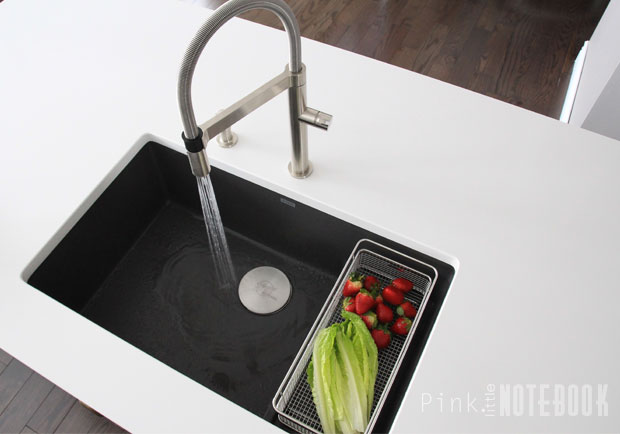
It demonstrates why a sink shouldn’t be considered an isolated purchase.
The countertop, faucet, accessories and sink configuration all contribute to the finished result.
Is Silgranit Better Than a Porcelain or Fireclay Sink?
That depends on what you want.
Porcelain and fireclay sinks have a beautiful traditional character, particularly in farmhouse kitchens.
Silgranit offers a different combination of color flexibility, granite-composite styling, durability and modern design options.
There’s no reason to declare one material universally superior.
The right choice comes down to your design style, maintenance preferences, budget and daily kitchen habits.
Is a Silgranit Sink Worth the Extra Cost?
For many homeowners, the answer can be yes.
But don’t evaluate it only by comparing the sink’s purchase price to the cheapest stainless-steel option.
Consider how long you expect to keep the kitchen.
Consider whether you care about color matching.
Consider whether you prefer the look of a composite sink.
Consider how much you cook.
And consider whether the sink will become a major visual feature of the renovation.
A kitchen remodel is a large investment. Spending a little more on a fixture you use every day can make sense when that fixture fits your needs.
Who Should Consider a Silgranit Sink?
A Silgranit sink may be particularly appealing if you:
- Want a stone-like sink appearance.
- Don’t want traditional stainless steel.
- Want multiple color choices.
- Prefer a matte, contemporary appearance.
- Cook frequently.
- Want a sink that becomes part of the kitchen design.
- Are planning a major kitchen renovation.
- Want a sink that works with modern or transitional design.
Who Might Prefer Stainless Steel?
Stainless steel may still be the smarter option if your priorities are:
- Lower upfront cost
- Light weight
- Classic appearance
- Simple material familiarity
- Easy replacement
There is nothing wrong with choosing stainless steel.
The important thing is knowing why you’re choosing it.
How to Avoid Regretting Your Sink Choice
Before purchasing, ask yourself some very boring but very important questions.
How big are your largest pots?
Do you wash baking sheets by hand?
Do you like one giant basin or two smaller ones?
Where will the faucet sit?
Where will the drain go?
Do you want a garbage disposal?
How much counter space do you have?
Will the cabinet support the sink?
Do you want undermount or top-mount installation?
And perhaps most importantly:
Will you still like the sink five years from now?
Designing the Kitchen Around the Sink
A sink can become an unexpected anchor for the entire kitchen.
Start with the sink color.
Then coordinate the faucet.
Choose the countertop.
Move to the cabinet hardware.
Finally, bring in lighting and accessories.
This approach can create a much more cohesive result.
If you’re also exploring nature-inspired interiors, our biophilic design ideas can help you bring greenery and natural materials into the finished kitchen.
Small Details That Make a Big Difference
Once the major decisions are made, think about the practical extras.
- Sink grids
- Colanders
- Cutting boards
- Soap dispensers
- Drain accessories
- Faucet style
- Under-sink storage
These details can transform a basic sink into a more useful workstation.
And that’s really the secret of good kitchen design: don’t only make things look good. Make them work beautifully too.
Frequently Asked Questions About Silgranit Sinks
What is a Silgranit sink made from?
BLANCO describes SILGRANIT as a patented granite composite material made with up to 80% natural granite blended with acrylic.
Are Silgranit sinks durable?
They are designed to withstand everyday kitchen use, including heavy cookware, hot bakeware and common scuffing.
Do Silgranit sinks stain?
The material is designed to resist stains, but mineral deposits and residue can still appear. Regular cleaning helps prevent buildup.
Can a Silgranit sink scratch?
Like any kitchen surface, it can be damaged under extreme conditions. It is designed to resist everyday scratches and scuffs, and some metal marks may be transferred metal rather than actual damage.
How do you clean a Silgranit sink?
For normal daily care, BLANCO recommends dish soap, the soft side of a sponge, clean water and drying with a microfiber cloth.
Can I use steel wool on Silgranit?
No. BLANCO advises against steel wool and strong abrasive cleaning tools because they can scratch or dull the surface.
Can Silgranit handle hot pans?
BLANCO describes the material as resistant to heat from boiling water, hot pots and hot bakeware. Always follow the manufacturer’s current instructions for your particular sink.
Are black Silgranit sinks hard to keep clean?
They can be easy to maintain with regular cleaning, but mineral deposits may be more noticeable on dark finishes. Consistent cleaning and drying can help maintain the appearance.
Is Silgranit better than stainless steel?
Neither material is universally better. Silgranit offers a different look, color options and granite-composite construction, while stainless steel remains a practical and widely used choice.
Is a Silgranit sink good for a modern kitchen?
Yes. Its broad range of colors, clean shapes and matte stone-like appearance make it particularly suitable for modern, contemporary and transitional kitchens.
Final Verdict: Is a Silgranit Sink Worth It?
A kitchen sink has to do a lot more than hold dirty dishes.
It needs to survive hot cookware, handle everyday messes, fit the countertop, work with the cabinets, accommodate your cooking habits and still look good after years of use.
That’s where the Silgranit sink makes a strong argument.
Its granite-composite appearance gives homeowners more design freedom than a traditional stainless-steel sink. Dark finishes can add dramatic contrast. White and lighter colors can create a clean, seamless look. Different bowl configurations allow you to prioritize large cookware, separation of tasks or workstation functionality.
The One Plus Two Design Co. renovation story also makes an important design point: a sink can be part of the overall visual identity of the kitchen.
It shouldn’t always be an afterthought.
If you’re remodeling your kitchen, start by thinking about how you actually use the sink. Look at your largest cookware. Consider your countertop. Decide whether you want one bowl or two. Think about the faucet. Then choose the color and installation style that complete the room.
And yes, Silgranit may cost more than the most basic sink options.
But when you use something multiple times every day, looks at it every time you enter the kitchen, and expect it to survive years of cooking, the right sink can be worth the investment.
Beautiful enough to be noticed. Tough enough to be used. Practical enough to earn its place.
That’s a pretty good recipe for a kitchen sink.