Video credit: Interiorz via YouTube.
Wallpaper is back—and it is definitely not the wallpaper you remember from your grandmother’s house.
The old days of predictable floral borders, heavy patterns, and rooms that looked like they had been trapped in a time capsule are long gone. Today’s wallpaper trends are brighter, smarter, more playful, and much easier to work into modern interiors.
The original One Plus Two Design Co. wallpaper article captured that change perfectly. The post looked at the resurgence of wallpaper and highlighted five standout directions: geometric designs, animal prints, natural elements, florals, and organic patterns. It also explored how wallpaper can do much more than simply cover four walls.
That idea has aged well.
Designers continue to use wallpaper on feature walls, in powder rooms, bedrooms, ceilings, entryways, and other small areas where a little pattern can have a surprisingly big effect.
Architectural Digest has similarly highlighted wallpaper as a versatile design tool that can be used on ceilings, paneled walls, in small spaces, and even as framed artwork.
So whether you’re planning a full room makeover or simply trying to make one boring wall less boring, these wallpaper ideas are worth a look.
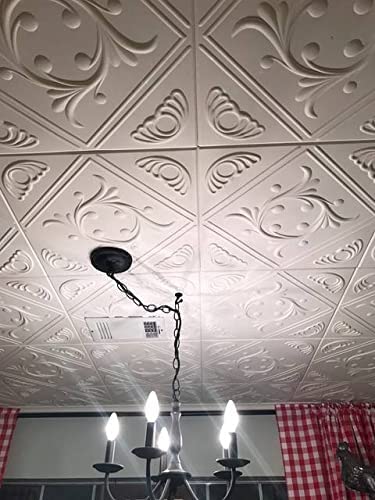
Why Wallpaper Is Making Such a Big Comeback
Wallpaper has one huge advantage over paint: personality.
Paint can give you a beautiful color, but wallpaper can give you color, texture, pattern, movement, and character all at once.
That can completely change the mood of a room.
A soft floral can make a bedroom feel romantic.
A black-and-white geometric pattern can make an entryway feel crisp and modern.
A tropical print can make a home office feel energetic.
And a wood-effect wall covering can bring warmth into a room without the cost or installation complexity of actual wood paneling.
The original article also points out another reason wallpaper is appealing: it can be tackled as a relatively affordable DIY project. “Relatively” is doing some serious work there. Anyone who has ever tried lining up wallpaper panels knows that wallpapering can go from “fun weekend project” to “why am I doing this to myself?” very quickly.
Still, the payoff can be worth it.
For more inspiration about combining paint, pattern, and other finishes, take a look at 10 Hot Interior Design Trends.
Wallpaper Is No Longer Just for Four Walls
This is one of the biggest shifts in modern wallpaper design.
You can use wallpaper almost anywhere.
- One feature wall
- A powder room
- A bedroom behind the bed
- A hallway
- A closet
- The back of a bookcase
- A ceiling
- Inside architectural panels
- A framed wallpaper panel
Architectural Digest has highlighted several of these unconventional applications, including ceilings, paneled walls, small spaces, and wallpaper used as framed artwork.
That means you don’t need to commit to covering an entire house.
Sometimes a little wallpaper goes a very long way.
1. Geometric Wallpaper: The Easy Way to Make a Room Look Modern
Geometric wallpaper remains one of the easiest ways to give a room a contemporary update.
The original One Plus Two Design Co. article specifically highlighted geometric designs in soft neutrals, along with chevron and hexagon patterns.
And there is a reason these patterns work so well.
Geometry gives the eye somewhere to go.
Instead of a flat wall that simply sits in the background, a geometric pattern creates rhythm and movement.
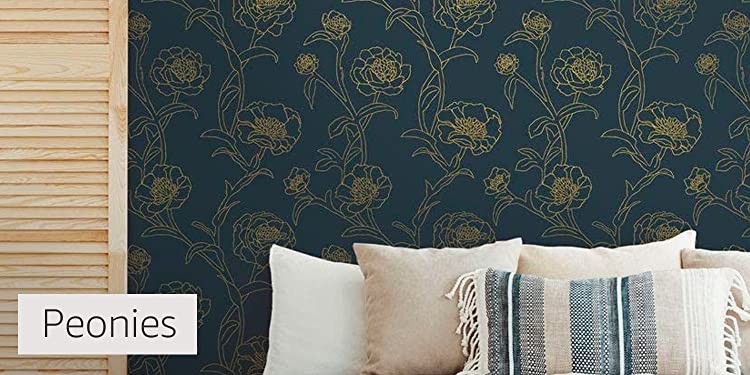
Soft Geometric Wallpaper
You don’t need an intense black-and-white pattern to get the geometric effect.
Soft gray, beige, cream, blue, and muted metallic combinations can feel sophisticated without becoming overwhelming.
This makes neutral geometric wallpaper particularly useful for:
- Living rooms
- Home offices
- Bedrooms
- Entryways
- Dining rooms
- Powder rooms
Chevron Wallpaper
Chevron brings strong directional movement to a wall.
It can make a narrow wall feel more dynamic and can add a little energy to an otherwise simple room.
Hexagon Wallpaper
Hexagon patterns are especially popular because they can feel both geometric and organic.
The six-sided shape can look crisp and architectural while still feeling softer than a strict grid.
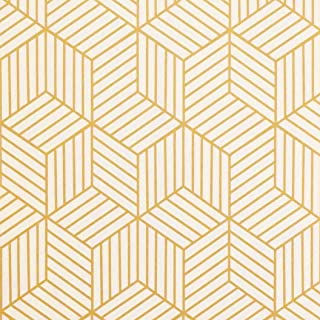
Geometric Wallpaper in a Small Bathroom
This is where the original article’s real-life story becomes particularly interesting.
During a master ensuite renovation, a repositioned door left an awkward imperfection in the wall. Instead of living with it, wallpaper became a clever way to disguise the problem and add some personality.
The selected wallpaper featured whites and warm greys with a geometric pattern.
And let’s be honest, making a water closet look attractive can be a bit of a decorating challenge.
Wallpaper accepts the challenge.
For another bathroom renovation project, see this ensuite bathroom renovation.
Chevron and Hexagon Patterns Together
The supplied image below shows how geometric shapes can become the primary architectural feature of a room.
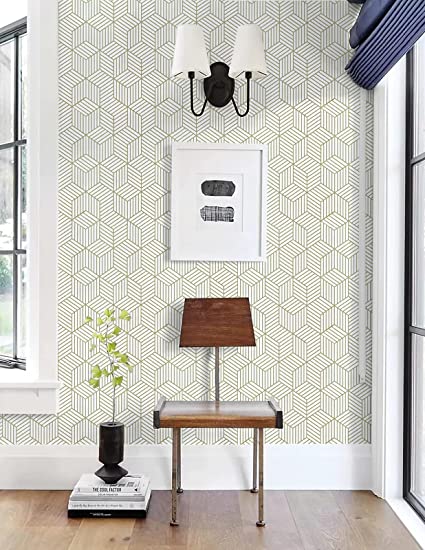
The design is strong enough to stand alone, which means the rest of the décor can remain relatively simple.
2. Animal Print Wallpaper: Bold Without Being Over-the-Top
Animal print wallpaper sounds dramatic.
And it can be.
But modern animal-print designs don’t necessarily mean giant leopard spots covering every inch of the wall.
The original article specifically called out stylized animal prints in softer neutral tones.
That’s an important distinction.
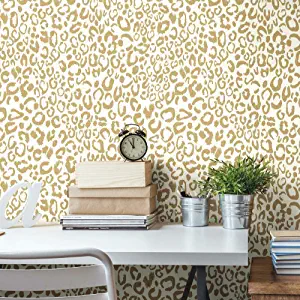
Instead of making the room feel wild, a toned-down animal pattern can feel elegant and slightly unexpected.
That makes it a great option for:
- Home offices
- Bedrooms
- Powder rooms
- Reading nooks
- Closets
- Accent walls
A neutral animal pattern can also work nicely with black hardware, white furniture, natural wood, and soft beige textiles.
For additional ideas on keeping a room balanced rather than overly busy, explore transitional design tips.
3. Natural Wallpaper: Bring Texture and the Outdoors Inside
Natural-inspired wallpaper is another major direction.
The original article highlighted wood-look wallpaper and other designs inspired by natural elements.
This is especially appealing because natural textures make a room feel warmer.
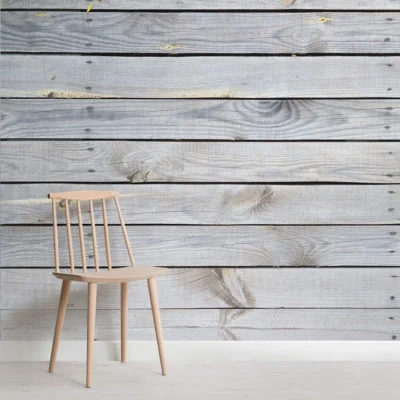
A wood-effect wall covering can create the appearance of reclaimed boards without actually installing reclaimed boards.
That can be especially useful when you want warmth but don’t want to sacrifice valuable floor or wall space.
Wood-Look Wallpaper
Wood textures work particularly well with:
- Modern farmhouse interiors
- Rustic rooms
- Cabins
- Bedrooms
- Entryways
- Home offices
If you’re decorating around a modern farmhouse palette, see modern farmhouse paint color ideas for shades that complement warm wood textures.
Nature-Inspired Prints
Nature-inspired wallpaper doesn’t have to imitate wood.
Leaves, branches, palms, grasses, and other botanical forms can create the same connection with nature while adding much more pattern.
This can be a great option for people who love biophilic interior design.
For more ideas, explore biophilic design ideas for homes.
4. Tropical and Palm Wallpaper: Instant Vacation Energy
Tropical wallpaper can transform a plain room almost instantly.
A wall filled with palm leaves can make a space feel dramatic, energetic, and slightly exotic.
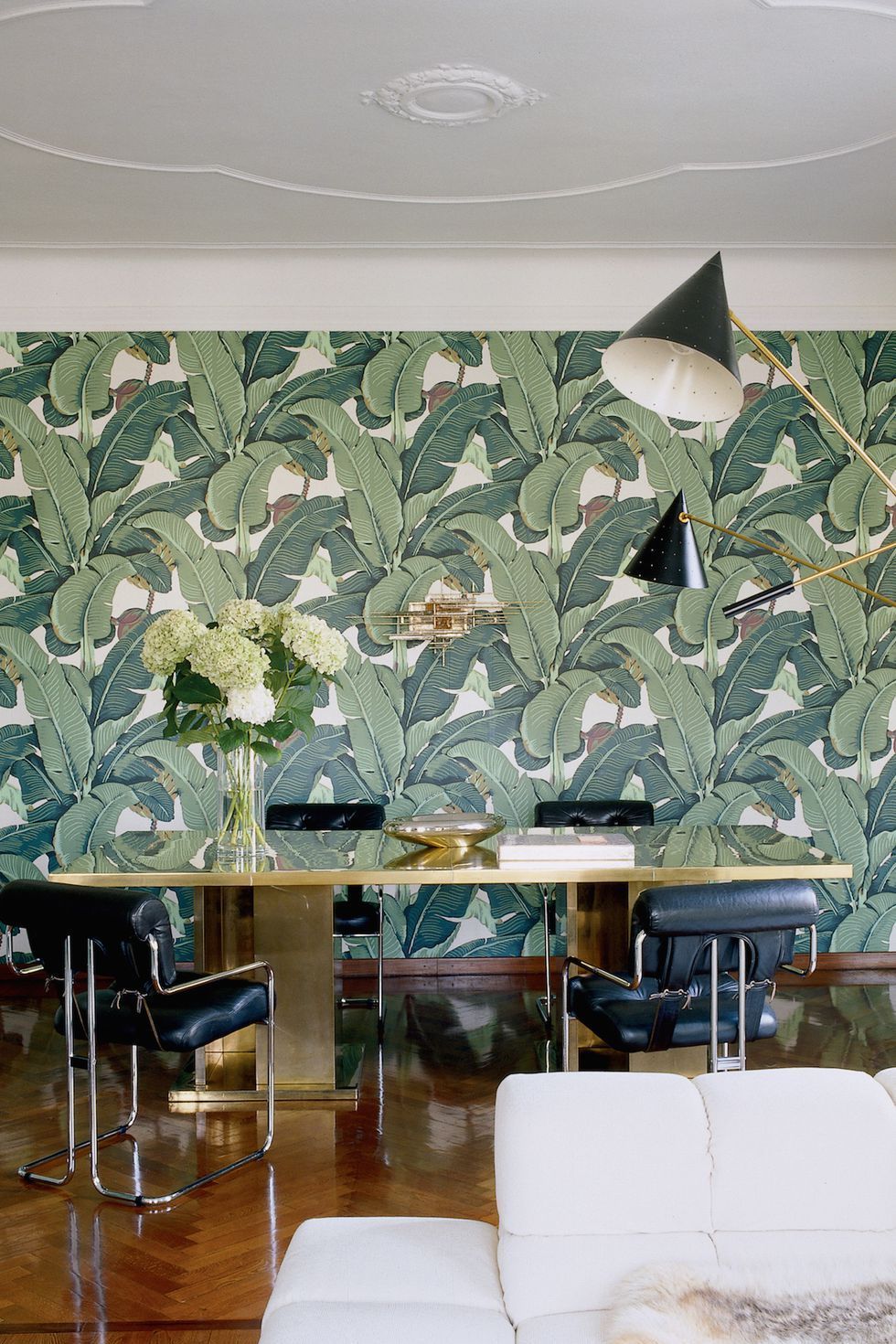
The trick is to let the wallpaper carry the personality.
Keep furniture relatively simple and repeat one or two colors from the print elsewhere in the room.
For example, green leaves can be echoed through plants, cushions, or small accessories.
5. Floral Wallpaper: Romantic, Fresh, and Completely Modern
Here’s a funny little confession from the original article:
The writer says, essentially, “I know I said no florals.”
And then a beautiful floral example changes everything.
That’s one of the problems with making absolute statements about wallpaper.
Never say never.
Because modern floral wallpaper can be completely different from old-fashioned floral wallpaper.
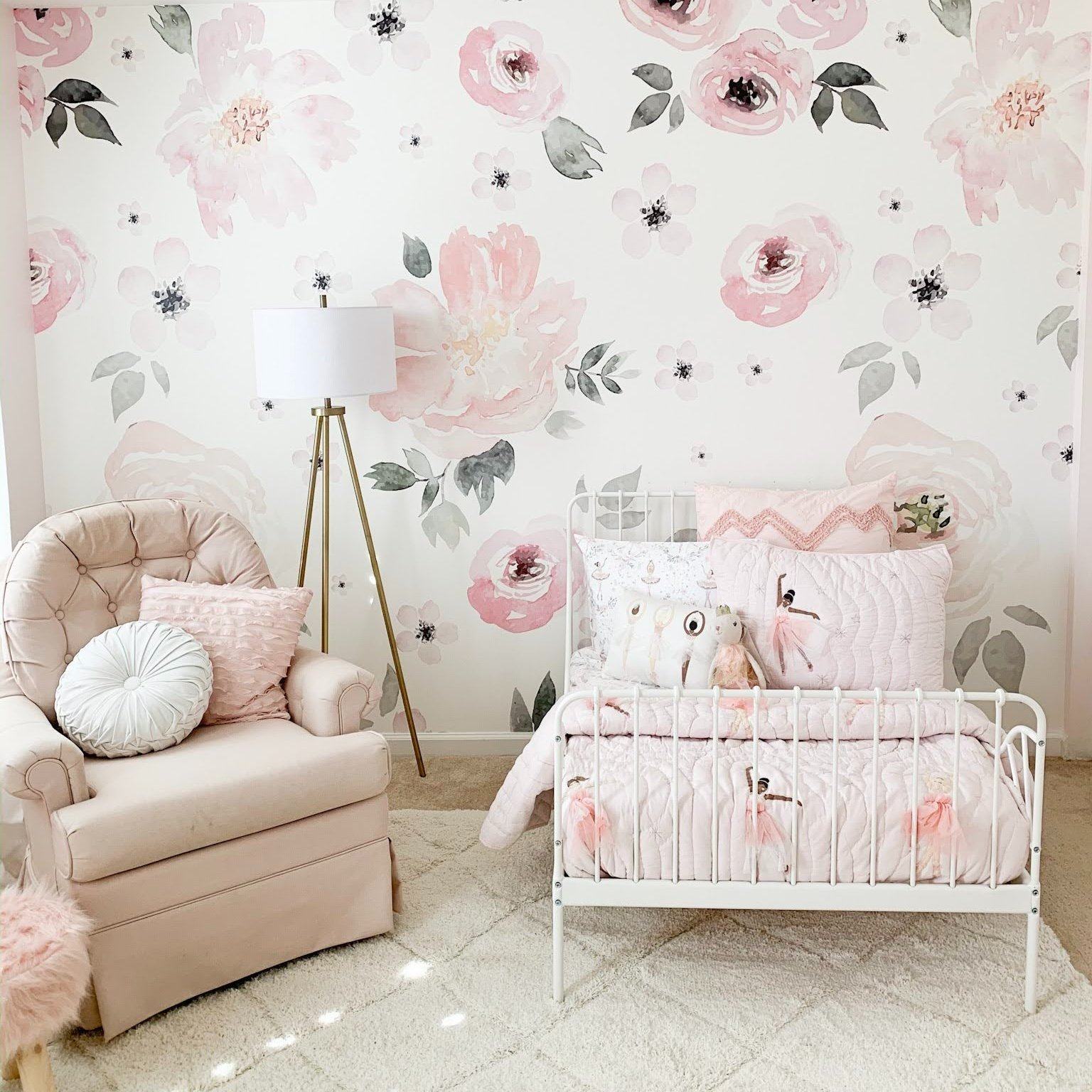
This soft floral nursery is a perfect example of how wallpaper can create a complete atmosphere rather than simply decorate a wall.
The blush-colored flowers work with the white furniture, soft textiles, and pale furnishings.
Soft Floral Wallpaper
Pastel floral wallpaper works beautifully in:
- Nurseries
- Bedrooms
- Guest rooms
- Bathrooms
- Reading spaces
Black-and-White Floral Wallpaper
Not all floral patterns are soft and romantic.
Black-and-white floral wallpaper can be bold, modern, and surprisingly versatile.
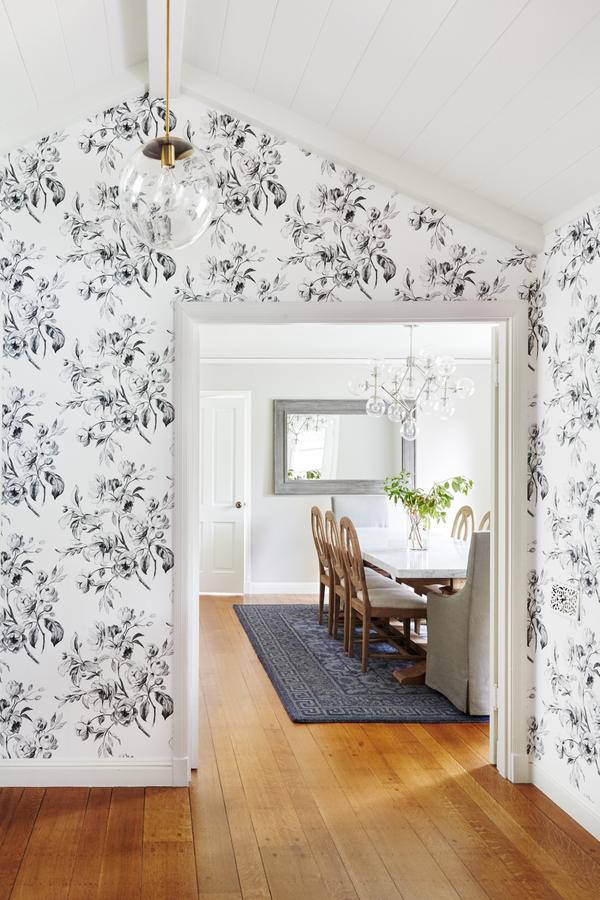
The lack of color actually gives you more freedom with furniture and accessories.
You can introduce blue, green, brass, wood, or even colorful artwork without fighting the wallpaper.
For neutral wall-color coordination, see the best grey paint colors.
6. Oversized Florals for Maximum Impact
Large floral wallpaper is another way to make a room memorable.
Instead of tiny repeating flowers, oversized blooms create a mural-like effect.
That makes the wallpaper itself become a piece of art.
The original article’s floral examples show how pattern scale can completely change the feeling of the room.
A small floral can feel delicate.
A large floral can feel dramatic.
And somewhere in between is usually the sweet spot for a room that wants personality without chaos.
7. Organic Patterns: The Best of Both Worlds
Organic wallpaper patterns sit somewhere between geometry and nature.
They may include flowing lines, oversized botanical shapes, abstract leaves, branches, or hand-drawn forms.
The original article highlights black-and-white organic designs as particularly effective because they can add visual interest without restricting the rest of the décor.
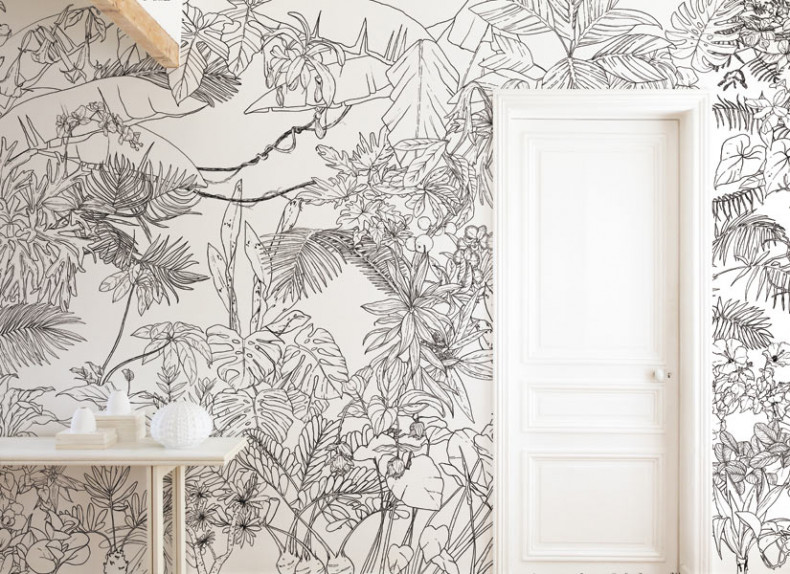
This is a great option if you want something artistic but don’t want a very literal floral print.
Organic patterns can make walls look almost hand-painted.
In fact, the original article compares one design to oversized hand-stenciled art.
8. Wallpaper as an Accent Wall
You don’t have to wallpaper the whole room.
One of the easiest ways to experiment is to choose a single wall.
This works particularly well behind:
- A bed
- A sofa
- A desk
- A dining table
- A console
- A television
An accent wall also lets you choose a stronger pattern because there is less wallpaper competing with furniture and accessories.
Architectural Digest regularly highlights feature-wall applications as an effective way to introduce bold wallpaper without covering an entire room.
9. Wallpaper in a Powder Room
A powder room is almost the perfect testing ground for wallpaper.
It’s small.
It can handle bold personality.
And you usually don’t spend hours sitting there staring at the walls.
Okay, maybe some people do.
But that’s another discussion.
A dramatic wallpaper can turn a tiny bathroom into a memorable little jewel box.
Try:
- Dark floral wallpaper
- Geometric wallpaper
- Animal prints
- Black-and-white organic patterns
- Bold tropical designs
For more bathroom inspiration, revisit the ensuite renovation ideas.
10. Wallpaper on the Ceiling: The Most Unexpected Trend
Yes, the ceiling.
The original article specifically points out that wallpaper has started moving upward.
And designers have continued to use wallpaper on ceilings as a way to create a dramatic fifth wall.
It works especially well when the walls are relatively quiet.
A patterned ceiling can add interest without taking away from furniture or artwork.
It can be a particularly effective idea in dining rooms, bedrooms, entryways, and small spaces.
11. Wallpaper Can Hide an Imperfect Wall
This is where wallpaper goes beyond decoration and becomes a practical design tool.
If a wall has a minor visual imperfection that is suitable to cover, wallpaper can sometimes disguise it while giving the room an intentional finish.
That’s exactly the type of situation described in the original article’s ensuite project.
Instead of spending enormous effort making every tiny bump disappear, the wallpaper becomes part of the solution.
Of course, wallpaper is not a cure for major moisture problems, structural damage, or improperly prepared surfaces. The wall still needs to be clean, sound, and properly prepared for the chosen wallcovering.
12. How to Choose Wallpaper for a Grey Room
Grey walls can be extremely flexible.
Warm grey works nicely with:
- Soft blue
- Warm white
- Beige
- Natural wood
- Muted green
Cool grey can work well with:
- Blue
- White
- Charcoal
- Black
- Cool green
If you are already using grey paint, compare the undertones before choosing wallpaper.
Our warm grey paint guide is useful when you’re coordinating warm neutral walls with patterned wallpaper.
13. Wallpaper with Modern Farmhouse Style
Wallpaper may not be the first thing you associate with modern farmhouse interiors, but it can work beautifully.
Choose:
- Soft botanical prints
- Muted geometrics
- Subtle buffalo-inspired patterns
- Wood-look textures
- Neutral florals
Pair them with natural wood, black hardware, woven materials, and simple furniture.
The result feels warm without becoming overly traditional.
For more inspiration, read our modern farmhouse paint guide.
14. Wallpaper with Transitional Interior Design
Transitional interiors are especially friendly to wallpaper because they combine traditional and contemporary elements.
A classic floral in a modern color palette can bridge those styles beautifully.
So can a geometric wallpaper paired with traditional wood furniture.
The goal is not to make everything match.
The goal is to make the room feel connected.
For more ideas, see these transitional design tips.
15. Wallpaper and Natural Materials
Wallpaper becomes especially effective when paired with natural materials.
Think:
- Oak flooring
- Walnut furniture
- Stone countertops
- Rattan baskets
- Linen textiles
- Green plants
A natural wallcovering can reinforce those materials, while a geometric wallpaper can provide contrast.
For another example of combining patterned surfaces with natural materials, see our area rug ideas and buying guide.
Wallpaper in the Kitchen: Yes, Really
The kitchen may not be the first room that comes to mind, but wallpaper can work beautifully in carefully chosen locations.
Consider using it:
- Behind open shelving
- On one non-splash wall
- In a breakfast nook
- Inside a pantry
- Above a backsplash line
Always choose a wallcovering appropriate for the location, and avoid placing standard wallpaper directly behind areas exposed to frequent heat, steam, or water unless the specific product is designed for that environment.
If you’re renovating your kitchen, our Silgranit sink guide is another useful resource for coordinating finishes throughout the space.
Wallpaper and Wood: A Beautiful Combination
Wood and wallpaper can complement each other surprisingly well.
A patterned wallpaper can soften a wall dominated by wood.
A wood-look wallpaper can reinforce a rustic theme.
A botanical pattern can add contrast to warm wood furniture.
The key is not to make every surface equally busy.
Give the room one main pattern and let the wood act as texture.
Wallpaper and Black Hardware
Black is a particularly easy finish to pair with wallpaper.
Black-and-white floral wallpaper with black hardware feels crisp.
Green botanical wallpaper with black lighting feels modern.
Warm neutral geometric wallpaper with black accents feels sophisticated.
The same principle applies to doors and hardware.
Our barn door handle guide shows how small hardware choices can influence an entire room’s visual character.
How to Choose the Right Wallpaper Pattern Scale
Pattern scale matters almost as much as color.
Small Patterns
Small repeating designs can feel subtle and are often easier to use throughout a room.
Medium Patterns
Medium-scale patterns usually provide a good balance between personality and versatility.
Large Patterns
Large-scale designs create drama and often work best as feature walls or in smaller rooms where you want a strong visual statement.
Before buying, look at a large sample if possible. A pattern that looks delicate on a tiny sample can become surprisingly bold when repeated across an entire wall.
How to Choose Wallpaper Color
Start with the colors already in the room.
Look at the sofa.
Look at the flooring.
Look at the curtains.
Look at the artwork.
Then choose wallpaper that either repeats or deliberately contrasts those colors.
For a neutral room, wallpaper is an excellent opportunity to introduce a new color without repainting everything.
Wallpaper vs. Paint
| Feature | Wallpaper | Paint |
|---|---|---|
| Color | Excellent | Excellent |
| Pattern | Excellent | Limited without special techniques |
| Texture | Can be substantial | Usually minimal |
| DIY difficulty | Moderate | Generally easier |
| Design impact | Very high | Depends on color and technique |
| Easy to change | Usually more work | Usually easier |
How to Test Wallpaper Before Committing
One of the smartest things you can do is buy a sample first.
Don’t judge wallpaper only by a tiny image on your phone.
Look at a larger sample in your actual room.
Check it in daylight.
Check it at night.
Put it next to your furniture.
Put it next to your flooring.
Look at it from across the room.
Architectural Digest has also recommended testing wallpaper before committing, particularly when you’re unsure how a pattern will feel at different times of day.
Don’t Forget About the Ceiling
The ceiling is often the most forgotten surface in the entire house.
Most people paint it white and move on.
Wallpaper gives you another option.
A patterned ceiling can make a dining room feel more intimate. A subtle botanical design can make a bedroom feel layered. A geometric pattern can make an entryway memorable.
The key is choosing the right pattern for the size and architecture of the room.
Wallpaper Can Even Be Used as Art
Not ready to cover a wall?
There is another option.
Frame a section of wallpaper.
This approach gives you the visual impact of a patterned wall without permanently committing to a full installation.
It can also be a clever way to use leftover wallpaper from another project.
A large framed botanical or geometric panel can function almost like oversized artwork.
Wallpaper for a Nursery or Kids’ Room
Floral and botanical wallpaper can create a beautiful children’s room, especially when the pattern uses soft colors.
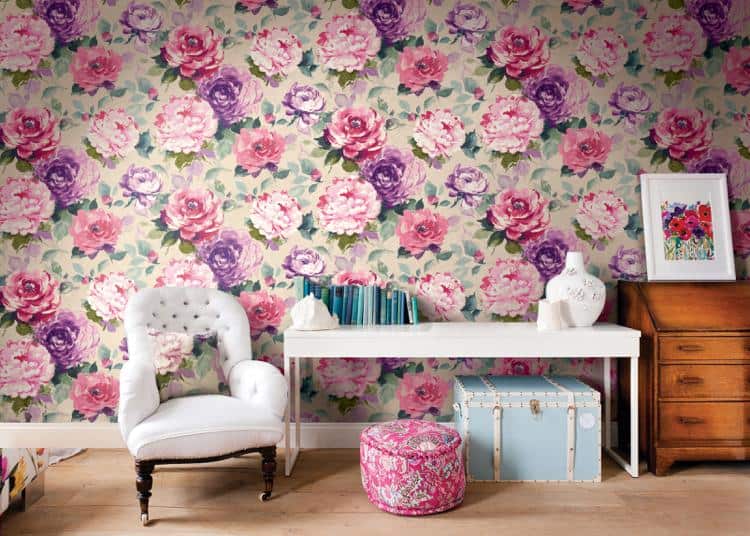
But remember that children grow quickly.
A wallpaper selected for a toddler may not feel right five years later.
For that reason, some parents choose removable wallpaper or use bold wallpaper on a single feature wall rather than covering the entire room.
Wallpaper for a Home Office
A home office can handle a little more personality than many people realize.
A subtle geometric design can feel professional.
A botanical print can add warmth.
An animal pattern can make the room memorable.
A textured neutral can create depth without becoming distracting.
The right wallpaper can also make a small office feel like a deliberately designed space rather than a desk squeezed into the spare bedroom.
Wallpaper for a Hallway or Foyer
Hallways are often overlooked because they aren’t rooms where you spend hours relaxing.
But that’s exactly why wallpaper can work there.
A hallway can handle a stronger pattern because you experience it in shorter bursts.
A black-and-white floral or organic pattern can look spectacular in a foyer.
And because the space is smaller, the overall wallpaper investment may be more manageable.
How Wallpaper Works with an Area Rug
If your wallpaper has a bold pattern, keep the area rug quieter.
If the wallpaper is subtle, the rug can carry more visual weight.
For example, a black-and-white botanical wallpaper can pair beautifully with a soft neutral rug.
A pale geometric wallpaper can support a more colorful rug with blue or green accents.
The goal is balance, not competition.
How Wallpaper Works with a Barn Door
A barn door and patterned wallpaper can make an excellent pair.
Natural wood against geometric wallpaper creates contrast.
Black barn-door hardware can repeat dark accents in a black-and-white wallpaper.
A rustic door can also make a delicate floral wallpaper feel more grounded.
The trick is to make one element the star and let the other support it.
Wallpaper and Modern Kitchen Details
Wallpaper can also become part of a larger kitchen design story.
Imagine a pale botanical wallcovering next to a warm wood island, a dark composite sink, and simple black hardware.
The wallpaper adds pattern while the other finishes provide structure.
This is exactly the type of layered approach that makes a kitchen feel complete rather than assembled from unrelated parts.
Common Wallpaper Mistakes to Avoid
Choosing a Pattern That’s Too Small for the Wall
Some tiny patterns can become visually noisy when repeated across a large surface.
Ignoring Lighting
The same wallpaper can look completely different in bright daylight and warm evening light.
Skipping Surface Preparation
Uneven or poorly prepared walls can affect the finished appearance.
Using Too Many Patterns
If the wallpaper is busy, simplify the furniture and accessories around it.
Forgetting the Room’s Existing Undertones
Warm and cool colors can behave very differently next to one another.
Choosing Only from a Smartphone Photograph
A screen cannot reliably reproduce every color, texture, or scale.
How to Make Wallpaper Look Expensive
You don’t necessarily need the most expensive wallpaper in the catalog.
Good design does most of the work.
Choose the correct scale.
Use a well-coordinated color palette.
Keep the surrounding room relatively edited.
Use appropriate lighting.
Finish the edges carefully.
When those details are right, even a moderately priced wallpaper can look polished and intentional.
2026 Wallpaper Trends Worth Watching
Wallpaper trends continue to move toward more personality and more texture rather than purely flat, safe surfaces.
Several directions are especially easy to incorporate:
- Nature-inspired botanical designs
- Large-scale florals
- Soft geometric patterns
- Textured wallcoverings
- Scenic and mural-like designs
- Animal-inspired patterns
- Warm neutral patterns
- Wallpaper used in unexpected architectural locations
Current design coverage continues to highlight textured, personalized, and statement-making wallpaper as strong options for homes that want more character.
You can browse additional inspiration from Architectural Digest’s wallpaper trend ideas.
Wallpaper Installation: DIY or Professional?
This depends heavily on the type of wallpaper.
Simple peel-and-stick products can be relatively approachable for DIYers.
Traditional pasted wallpaper can require considerably more care.
Large-scale patterns also require careful alignment, especially when matching seams.
If you’re covering a prominent wall with an expensive or difficult-to-install product, professional installation may be worth considering.
For first-timers, a small powder room or accent wall can be a less intimidating place to begin.
Architectural Digest’s wallpaper coverage also explores starting small and using wallpaper in compact areas when you want to experiment.
How to Coordinate Wallpaper with Paint
Wallpaper and paint don’t have to compete.
They can work together beautifully.
Choose one color from the wallpaper and repeat it on another wall.
Or choose a quiet neutral that lets the wallpaper take center stage.
For gray-based rooms, our cool grey paint ideas can help when you want a cooler backdrop.
For warmer interiors, compare those with our warm grey paint ideas.
How to Choose Between the Five Main Wallpaper Trends
Choose Geometric Wallpaper If…
You want your room to look modern, clean, and structured.
Choose Animal Print If…
You want something playful, unexpected, and a little adventurous.
Choose Natural Elements If…
You love warm textures, wood, greenery, and relaxed interiors.
Choose Florals If…
You want softness, romance, color, or a more decorative room.
Choose Organic Patterns If…
You want something artistic that sits somewhere between nature and abstraction.
Frequently Asked Questions About Wallpaper Trends
Is wallpaper still popular?
Yes. Wallpaper has seen a strong resurgence, with modern patterns and unexpected applications making it much more versatile than many people remember.
What are the biggest wallpaper trends?
Popular directions include geometric patterns, florals, botanical designs, animal prints, organic shapes, textures, and scenic or mural-style wallpaper.
Is wallpaper good for a small room?
Yes. Small rooms such as powder rooms can actually be excellent spaces for wallpaper because they can handle stronger visual impact.
Can wallpaper go on the ceiling?
Yes, provided the selected wallcovering and installation method are appropriate for the ceiling. A patterned ceiling can create a dramatic fifth wall.
Is floral wallpaper old-fashioned?
Not necessarily. Modern floral designs can be oversized, abstract, minimalist, colorful, or black and white, giving them a much fresher appearance.
Is geometric wallpaper good for a modern home?
Yes. Geometric wallpaper is one of the easiest ways to add structure, movement, and contemporary style.
Can wallpaper hide imperfections?
It can disguise some minor visual imperfections, but the wall still needs to be properly prepared and free from serious moisture or structural problems.
Should I wallpaper an entire room?
Not necessarily. One feature wall, a powder room, a hallway, or a ceiling can provide plenty of impact without covering every surface.
How do I know if a wallpaper pattern is too busy?
Look at a large sample next to your existing furniture and finishes. If the pattern competes with everything else in the room, consider a quieter design or use it on one wall.
Can wallpaper work with modern farmhouse décor?
Absolutely. Soft botanical prints, neutral geometrics, wood-look designs, and muted florals can all complement modern farmhouse interiors.
Final Thoughts on Today’s Best Wallpaper Trends
The biggest lesson from the original wallpaper article is still incredibly relevant: modern wallpaper is not the wallpaper of decades past.
Today’s designs can be subtle or dramatic.
They can be geometric or organic.
They can mimic wood, celebrate tropical leaves, showcase giant flowers, or introduce a playful animal print.
And you don’t even have to put them on an entire wall.
Use wallpaper behind the bed.
Try it in the powder room.
Turn an awkward hallway into a design moment.
Frame it like artwork.
Or, if you’re feeling particularly brave, look up.
Your ceiling has been waiting.
The most important thing is to choose wallpaper that works with the rest of the room. Think about color, pattern scale, lighting, furniture, flooring, and the amount of visual activity already present.
Test samples before committing.
Don’t rely only on online photographs.
And don’t be afraid to experiment in a small space first.
As the original One Plus Two Design Co. story proves, sometimes a small wallpaper project can solve a practical problem and create a beautiful design feature at the same time.
That’s the real magic of wallpaper: one roll can completely change how a room feels.
And unlike repainting an entire room, you can often make a huge visual statement with just one wall.
So go ahead.
Choose the pattern you’ve been staring at for weeks.
Make the boring wall interesting.
Give that powder room some personality.
Let your walls finally have a little fun.
Because plain walls are perfectly respectable.
But sometimes, they are simply asking for wallpaper.
I can’t see any pictures on your website. Any tips as to what I can do would help.